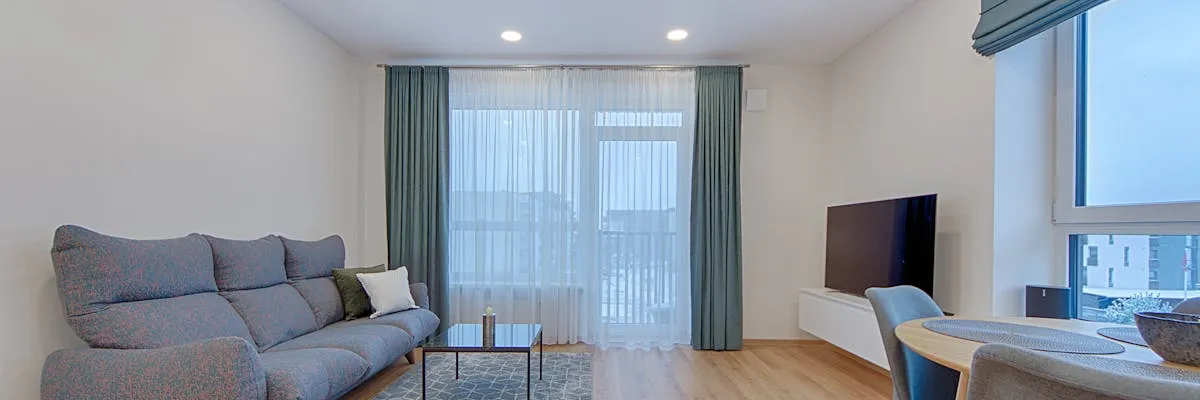
How to Sell an Apartment in Lithuania: Complete Guide 2026
Selling an apartment sounds simple — post a listing, find a buyer, sign at the notary. Reality is a bit different. Documents, photos, pricing, taxes, negotiations — it's easy to get lost if it's your first time.
This guide is a practical step-by-step plan from the decision to sell to the moment the money lands in your account. Nothing theoretical — just what you need to know and do.
Getting Started: Preparing for the Sale
Before posting a listing, it's worth thinking about timing. The Lithuanian real estate market has its seasons — the most active buyers search in spring (March–June) and autumn (September–November). In winter and during summer holidays, the market quiets down, meaning fewer viewings and longer selling times.
On average, selling an apartment from listing to notary transaction takes 1–3 months. If the price is realistic and the apartment is well-prepared — it can be faster. If not — it can drag on for six months or more.
Preparing the Apartment for Viewings
First impression is everything. A buyer makes up their mind in the first 30 seconds after walking through the door. Here's what to do:
- Remove unnecessary items — fewer things = greater sense of space. If a room has 5 wardrobes, the buyer will only see walls. Hide personal items — photos, fridge magnets, collectibles
- Cosmetic repairs — you don't always need a major renovation. Sometimes repainting walls in a neutral color, replacing old door handles, and fixing bathroom grout is enough
- Deep cleaning — windows, floors, kitchen, bathroom. Smell matters too — if the apartment has a tobacco or pet odor, the buyer will notice immediately
- Hallway and entrance — this is the first thing the buyer sees. Clean hallway, working lights, tidy door lock
- Balcony or terrace — often forgotten. A tidy balcony with some greenery looks like an extra room
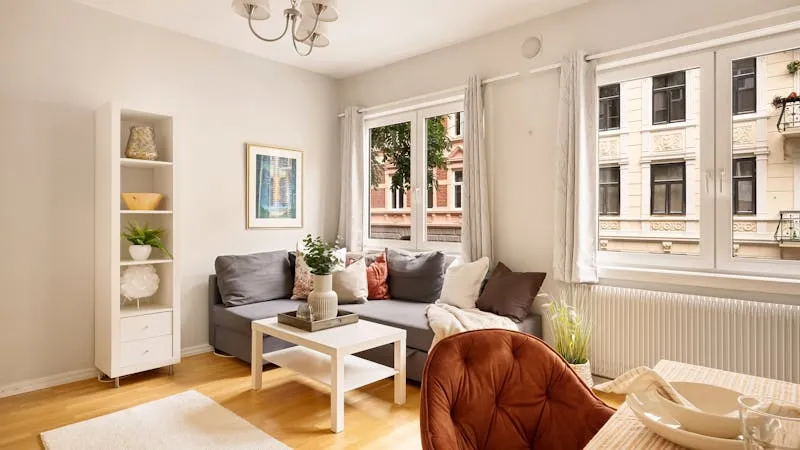
💡 Tip: If your budget is limited, invest in three things: cleanliness, freshly painted walls, and a tidy bathroom. These give the biggest return for the smallest cost.
How to Photograph Your Apartment for the Listing
Photos are the face of your listing. Buyers on the portal first see the photo, and if it's dark, blurry, or unappealing — they'll just click "next." Even a great apartment with bad photos won't get viewings.
Basic Rules
- Natural light — photograph during the day, open all curtains and blinds. On overcast days the light is more even and won't create harsh shadows — actually better than direct sunlight
- Wide-angle mode — use your phone's wide-angle mode or a special lens. Small Lithuanian rooms need to fit in the frame — shoot from corners or doorways
- Photograph ALL rooms — kitchen, bathroom, bedroom, balcony. If the apartment has a nice view from the window — definitely include it
- Stairwell and building exterior — if the stairwell is renovated, photograph it. This signals to the buyer that the building is well-maintained
- Floor plan — add the apartment floor plan to the listing. Aruodas.lt allows uploads, and listings with floor plans get more attention
What to Avoid
- Dark flash photos — they look terrible
- Personal items in frame — bedding on the sofa, cups on the table
- Toilet with the lid up — a classic mistake
- Fewer than 10 photos — listings with 10–15 photos get significantly more views
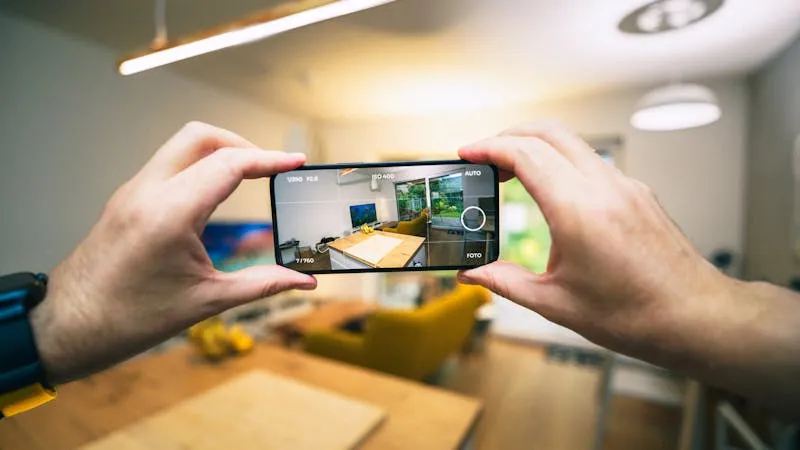
💡 Tip: If you're not confident in your photography skills — hire a professional photographer. It costs about 50–150 EUR, but a well-photographed apartment sells faster and often for a better price.
How Much to Ask: Setting the Price
Pricing is one of the most important and most commonly mishandled parts. Too high a price means the apartment will sit on the portal for months, and buyers will start thinking: "something must be wrong with it."
How to Set a Realistic Price
- Check similar listings — filter Aruodas.lt and Domoplius.lt by neighborhood, area, floor, and renovation condition. This shows what other sellers are asking
- Check actual transaction prices — Registrų centras publishes actual sale prices, not just asking prices. This is a much more accurate reference point
- Evaluate your apartment's strengths — floor, renovated building, parking spot, energy class, neighborhood, distance to public transport
- Check with the property value calculator — this will help you quickly get a picture of market value in your area
Pricing Psychology
A price of 149,900 EUR looks psychologically better than 150,000 EUR — it's a retail trick, but it works in real estate too. On the other hand, an overly "clever" price (e.g., 148,737 EUR) can look strange.
💡 Tip: It's better to start with a realistic price than to start too high and lower it later. Price changes are visible on the portal, and buyers see that the price was reduced — this weakens your negotiating position.
Where to List: Platforms and Brokers
There are several main places to list property for sale in Lithuania:
- Aruodas.lt — Lithuania's largest real estate portal. Most buyers search here — if you're only listing on one portal, it should be Aruodas
- Domoplius.lt — second largest. A basic listing costs 7.99 EUR (30 days), with promotion — up to 14.99 EUR
- Facebook groups — free, but less structured. Works as an additional channel
- Real estate broker — if you don't have time or experience, a broker handles everything: photos, listing, viewings, negotiations, documents. Commission is typically around 2–5%, most commonly ~3% of the sale price
For a detailed comparison of platforms, prices, and features, we wrote a separate article — Real Estate Listing Portals in Lithuania: Which One to Choose in 2026?.
Writing a Good Listing Description
Photos aren't enough. The description should be specific and informative:
- Area, floor, number of rooms
- Renovation year and what was done
- Heating type and average winter costs
- Neighborhood: shops, kindergartens, schools, public transport
- Parking spot (if available)
- Energy performance class
What Documents You'll Need
Gathering documents is the part everyone wants to skip, but without them the notary simply won't approve the transaction. The good news — most can be arranged within 1–2 weeks if you start early.
Mandatory Documents
- Personal ID — passport or identity card
- Property registry extract — obtained from Registrų centras (registrucentras.lt), costs ~5–12 EUR. Confirms ownership, encumbrances, mortgages
- Energy Performance Certificate (ENS) — mandatory for selling property under Lithuanian law. Performed by a certified energy auditor. Cost: ~80–250 EUR depending on apartment size. Valid for 10 years
- Utility payment certificates — certificates from heating, water, and electricity providers confirming no outstanding debts
- HOA/building management certificate — confirms no debts to the building association
- Spouse consent — if the apartment was acquired during marriage, you need a notarized spouse consent, even if the spouse is not a co-owner on the registry
Situational Documents
- Mortgage discharge — if the apartment is pledged to a bank, you need the bank's consent and mortgage cancellation. This can take 2–4 weeks, so start early
- Cadastral data update — if there was a layout change or reconstruction, updated cadastral measurements are needed (~100–200+ EUR)
- Power of attorney — if someone else is handling the sale, a notarized power of attorney is required
💡 Tip: Start gathering documents BEFORE finding a buyer. A common situation — the buyer is found, but the deal stalls for 3 weeks because the seller doesn't yet have the ENS or utility certificates. During that time, the buyer might find another apartment.
Taxes: Personal Income Tax on Property Sales
Before selling, it's important to understand whether you'll need to pay personal income tax (GPM — Gyventojų pajamų mokestis). Good news — most sellers don't pay it.
GPM Rates
| Gain Amount | Tax Rate |
|---|---|
| Up to 253,065 EUR per year | 15% |
| Above 253,065 EUR per year | 20% |
Taxable amount = sale price minus acquisition cost (documented purchase price or inherited value).
When You DON'T Need to Pay GPM
- Declared residence for 2+ years — if your residence was declared at the apartment for the last 2 years, the gain is tax-free
- Reinvestment exemption — if your declared residence was shorter than 2 years, the gain is still tax-free if you reinvest in another EEA home within 1 year
- Property owned for 10+ years — investment property held for more than 10 years is sold tax-free
- Annual gain under 2,500 EUR — not taxed
Practical Example
You bought an investment apartment 5 years ago for 80,000 EUR. You sell it for 120,000 EUR. Gain — 40,000 EUR. GPM: 40,000 × 15% = 6,000 EUR. If you waited another 5 years (to 10 years of ownership) — the tax would be 0 EUR.
To calculate how much you'd actually earn from the sale after taxes, you can use the profitability calculator.
💡 Tip: Even if the gain is tax-exempt, keep documents proving the exemption — the acquisition agreement and residence declaration history. VMI (tax authority) may ask for proof.
The Transaction Process: From Agreement to Receiving Payment
You've found a buyer and agreed on a price. What's next? Here's the complete process step by step.
1. Agreeing on Terms
Verbal agreement on the price, apartment handover date, and other conditions (e.g., whether the apartment is sold with furniture).
2. Preliminary Agreement and Earnest Money
Often (but not always) a preliminary agreement is signed, where the buyer pays earnest money — typically 5–10% of the price. This shows both parties are serious. If the buyer backs out — the earnest money stays with the seller. If the seller backs out — they return double.
3. Document Preparation (1–2 Weeks)
The seller gathers all required documents (see section above). The buyer arranges financing with their bank if buying with a mortgage.
4. Buyer's Bank Appraisal (1–2 Weeks)
If the buyer is purchasing with a mortgage, their bank will order an independent property appraisal. This can take 1–2 weeks. If the appraisal is significantly lower than the agreed price — renegotiation may be needed.
5. Notary Transaction
The visit to the notary is the official moment of ownership transfer. The notary:
- Verifies all documents
- Reads the purchase-sale agreement
- Confirms both parties' identity and consent
- Registers the transaction with Registrų centras
Notary fee: ~300–500 EUR depending on the amount (typically paid by the buyer, but negotiable).
6. Payment Transfer
Money is transferred by bank transfer — not in cash. Usually the money is transferred on the day of the transaction or within 1–3 business days, depending on the contract terms and the buyer's bank.
7. Ownership Re-registration
The notary submits documents to Registrų centras. Ownership is re-registered within 1–3 business days. Fee: ~15–30 EUR.
8. Apartment Handover
A handover act is drawn up: meter readings are recorded, keys are handed over, the apartment's condition is described. Both parties sign.
9. Utility Contract Transfer
The buyer re-registers utility contracts in their name (heating, water, electricity, internet). The seller informs service providers about the ownership change.
Checklist: Everything in One Place
Print or screenshot this — it'll save you from having to keep track of everything in your head:
Preparation:
- Decide on selling timing (preferably spring/autumn)
- Prepare apartment: cleaning, cosmetic repairs, declutter
- Photograph apartment (min. 10–15 photos, natural light)
- Set price based on market data
- Write listing description
Documents:
- Property registry extract (Registrų centras)
- Energy Performance Certificate (ENS)
- Utility payment certificates (heating, water, electricity)
- HOA certificate
- Spouse consent (if applicable)
- Mortgage discharge (if applicable)
- Cadastral data update (if there was a layout change)
Selling:
- Post listing on portal(s)
- Organize viewings
- Negotiate with buyer
- Preliminary agreement and earnest money
Transaction:
- Submit complete document set to notary
- Buyer's bank property appraisal (if with mortgage)
- Notary transaction
- Receive payment to account
- Apartment handover act (meter readings, keys)
- Utility contract transfer to buyer
- GPM declaration (if applicable, by May 1 the following year)
Common Mistakes When Selling an Apartment
These mistakes are easily avoidable, but they keep happening again and again:
- Overpricing — the most common mistake. Emotions and "I invested so much in renovation" don't match market reality. Result — the apartment sits for months, and buyers think something is wrong
- Bad photos — dark, blurry, too few. A listing without good photos on the portal is simply invisible
- Not gathering documents early — the buyer is found, but the deal stalls for 3 weeks because the seller doesn't yet have the ENS or utility certificates. During that time the buyer may find another apartment
- Hiding defects — moisture, mold, noisy neighbors, planned construction nearby. Lithuanian law requires disclosure of known defects — hiding them can lead to legal disputes after the sale
- Forgotten spouse consent — classic situation: everything is ready, you arrive at the notary, and the notary asks: "Where is the spouse's consent?" Transaction postponed
- Incorrect GPM calculation — investment apartment sellers are often surprised that they owe 15% on the gain. Calculate in advance
- Selling in the wrong season — in winter or during summer holidays there are fewer buyers, meaning longer selling time and potentially a lower price
Frequently Asked Questions (FAQ)
How long does it take to sell an apartment in Lithuania?
On average 1–3 months from listing to notary transaction. If the price is realistic and the apartment is in good condition — it can be just a few weeks. If the price is too high or the season is unfavorable — it can take 6 months or longer.
Is the Energy Performance Certificate mandatory?
Yes. The ENS is mandatory under Lithuanian law when selling or renting real estate. Without it, the notary won't approve the transaction. The certificate can be performed by a certified energy auditor, costs about 80–250 EUR, and is valid for 10 years.
When don't you need to pay GPM after selling?
You don't need to pay if: (1) your residence was declared at the apartment for the last 2 years, (2) you owned the property for more than 10 years, (3) you reinvest the proceeds into another EEA home within 1 year, or (4) the annual gain doesn't exceed 2,500 EUR.
How much do notary services cost for selling an apartment?
The notary fee is calculated based on the transaction amount and is regulated by the state. Approximate prices: ~300–350 EUR for a sale of 100,000 EUR, ~450–500 EUR for a sale of 200,000 EUR. Usually the buyer pays, but it can be negotiated otherwise.
Is it worth hiring a real estate broker?
It depends on your situation. A broker handles photos, listing, viewings, negotiations, and helps with documents. Commission is typically 2–5% (most commonly ~3%). If you have time and experience — you can sell yourself and save. If you're selling for the first time and don't have time — a broker can speed up the process and help avoid mistakes.
Sources:
- PwC Worldwide Tax Summaries — Lithuania — accessed 2026-03-28
- Registrų centras — Real Estate Registry — accessed 2026-03-28
- Domoplius.lt — Pricing — accessed 2026-03-28
- Aruodas.lt — Real Estate Portal — accessed 2026-03-28
- Republic of Lithuania Personal Income Tax Law — accessed 2026-03-28
- Numbeo — Cost of Living in Lithuania — accessed 2026-03-28